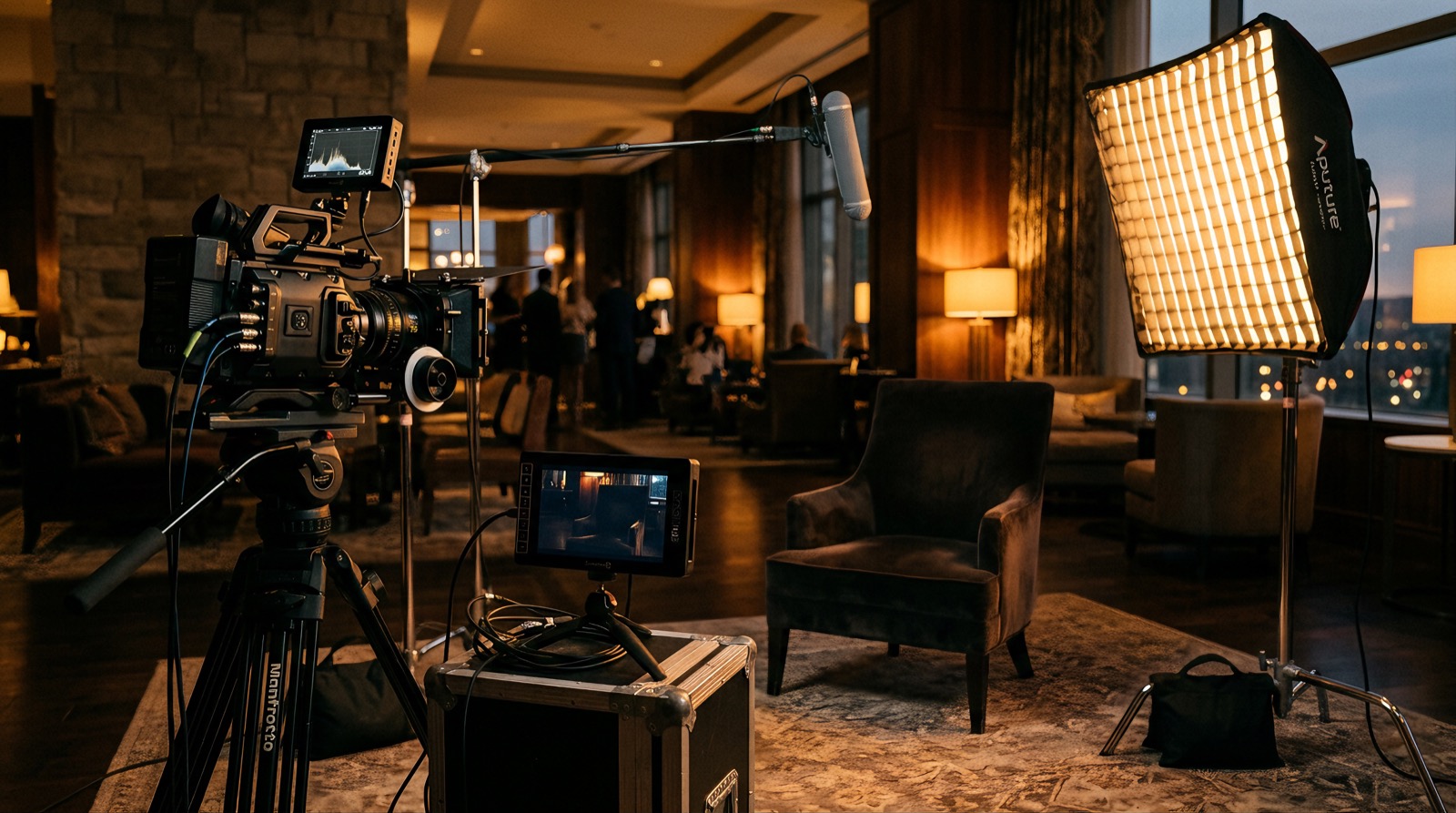
One Shoot, 30 Content Pieces: The Multi-Purpose Video Production Approach
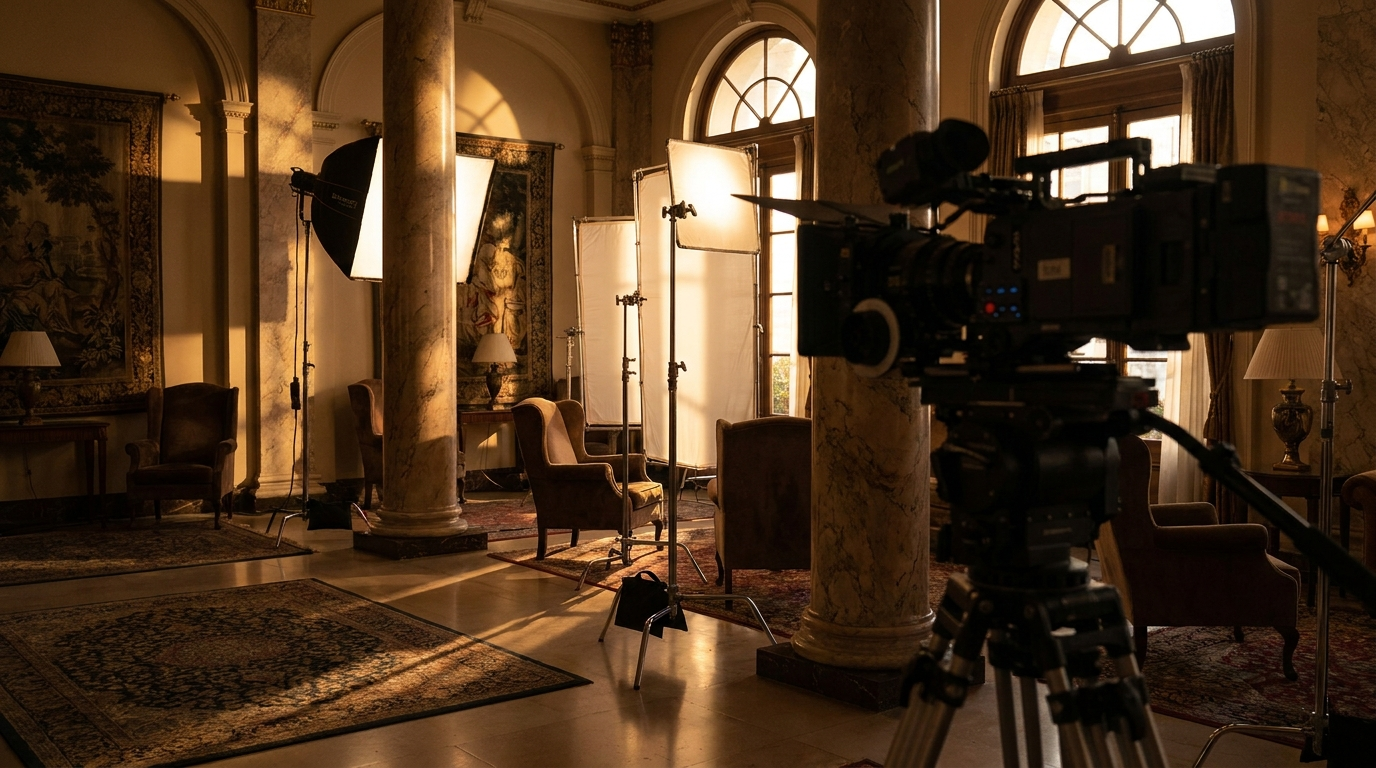
Most hotels hire a video crew once a year, get one polished 90 second film, post it twice, and forget it exists by March. That's not a video problem. That's a planning problem. Multi-purpose video production means treating one shoot day as a content system, not a single deliverable, so a single production turns into a hero film, a dozen social cuts, website loops, email assets, and paid ad creative, all from the same day on set.
I've built entire content calendars off a single two-day hotel shoot. Not because I'm efficient with a camera (I am, but that's not the point). It's because I plan the shot list around the outputs before anyone touches a camera. Most production companies plan around one hero film. I plan around thirty.
Why one video isn't the goal anymore
Here's the math that changes everything. A typical hotel brand film costs somewhere between $5,000 and $15,000 depending on scope (I break that down in detail in our full hotel video production cost breakdown). If that budget produces one 90-second film, your cost per usable asset is the full budget. If that same budget produces a hero film plus 25 to 30 additional pieces, your cost per asset drops by 90 percent or more.
Hotels are not short on content needs. You need Instagram Reels weekly. You need website loops for every landing page. You need email header video. You need 15-second cuts for paid social testing. You need long-form for YouTube. You need vertical, square, and horizontal versions of everything because every platform crops differently. One shoot day, planned correctly, covers all of it.
In my experience, the hotels that get the most value from video aren't the ones with the biggest budgets. They're the ones who stop thinking of production as an event and start thinking of it as inventory.
How we plan a multi-purpose shoot
This isn't "shoot everything and hope something's usable." That's how you end up with 400 clips and no strategy. Here's the actual process.
1. Start with the content calendar, not the camera
Before we book a single day, I ask what the property needs to post over the next six months. Seasonal promotions, a new suite launch, an anniversary campaign, whatever's on the marketing calendar. We reverse-engineer the shot list from that. If you don't know your content needs, you can't plan the shoot to cover them, and you'll end up back here in three months paying for another crew.
2. Shoot in modular pieces, not one continuous take
A lobby walkthrough shot as one long take gives you one clip. The same lobby shot in five deliberate pieces (the entrance, the check-in desk, the seating area, a detail shot of the light fixtures, a wide establishing shot) gives you five clips that can be recombined a dozen different ways. Modular footage is the whole trick. Every angle should be able to stand alone or cut into something bigger.
3. Capture verticals on purpose, not as an afterthought
Most crews shoot horizontal and crop down for social later. That's backwards. We shoot key moments in both orientations on set, because a cropped horizontal shot almost always loses the framing that made it work in the first place. If Reels and Stories matter to your property (and they should), plan for vertical before the shoot day, not during the edit.
4. Build the edit as a library, not a single timeline
This is where most of the multiplication actually happens. Every interview, every b-roll pass, every drone shot gets logged and organized so an editor can pull from it for months. We deliver the hero film first, then keep mining the same footage for cutdowns, seasonal posts, and campaign refreshes long after the crew has left. One well-organized shoot day can feed a content calendar for a full year.
What a real 30-piece breakdown looks like
On a two-day hotel shoot, here's roughly what comes out the other end: one 90-second hero brand film, one 30-second cutdown for paid ads, three to five 15-second cuts for Reels and TikTok, a website hero loop (usually 10 to 15 seconds, no audio, silent-autoplay friendly), 8 to 10 vertical Reels built from b-roll and interview moments, 4 to 6 horizontal YouTube-length clips for property highlights, email header video, a handful of GIF-style loops for landing pages, and raw b-roll segments held in reserve for whenever marketing needs something on short notice.
That's without a second shoot day. That's without a second invoice. This is exactly what a well-planned hotel brand film should set you up to do, not just exist as one nice video on your homepage.
Here is a piece we produced for the Sofitel Beverly Hills that shows how one property's story gets told across different formats and moments, all from the same relationship and the same production approach.
Where hotels get this wrong
The biggest mistake I see is treating the shoot list like a checklist for one video instead of a menu for many. A production company hands you a script for a 90-second film, shoots exactly what's in that script, and walks away. Nothing left over. No modular pieces. No vertical coverage. You paid full production rates for one asset that'll be stale by next season.
The second biggest mistake: no plan for what happens to the footage after delivery. If your production partner doesn't organize and archive raw footage in a way your team (or theirs) can revisit later, you're leaving content on the table that you already paid to capture. According to Think with Google, video consistently outperforms static content across every stage of the customer journey, but that only pays off if you're actually posting consistently, and you can't post consistently off one video a year.
There's no right or wrong way to structure every shoot. A boutique property with a tight budget needs a different plan than a resort chain running seasonal campaigns across five markets. But the principle holds everywhere: plan for the system, not the single deliverable.
The bottom line
If your last video shoot gave you one file and nothing else, you didn't get a bad video. You got an incomplete plan. The camera crew, the lighting, the days of setup, all of that overhead is the expensive part of production. The extra fifteen minutes of coverage that turns one video into thirty costs almost nothing in comparison. That's the whole argument for multi-purpose video production: you're already paying for the hard part. Make sure you're walking away with everything it can give you.
Want to see what a multi-purpose shoot plan looks like for your property? Reach out at visioneers.studio/contact or email hello@visioneers.studio. We'll map out exactly what one shoot day could get you.
MORE ARTICLES
Find a selection of Articles you may be interested in based on the this one
What Is Multi-Purpose Video Production and Why Hotels Love It
How to Write a Video Production Brief for Your Hotel (Free Template)