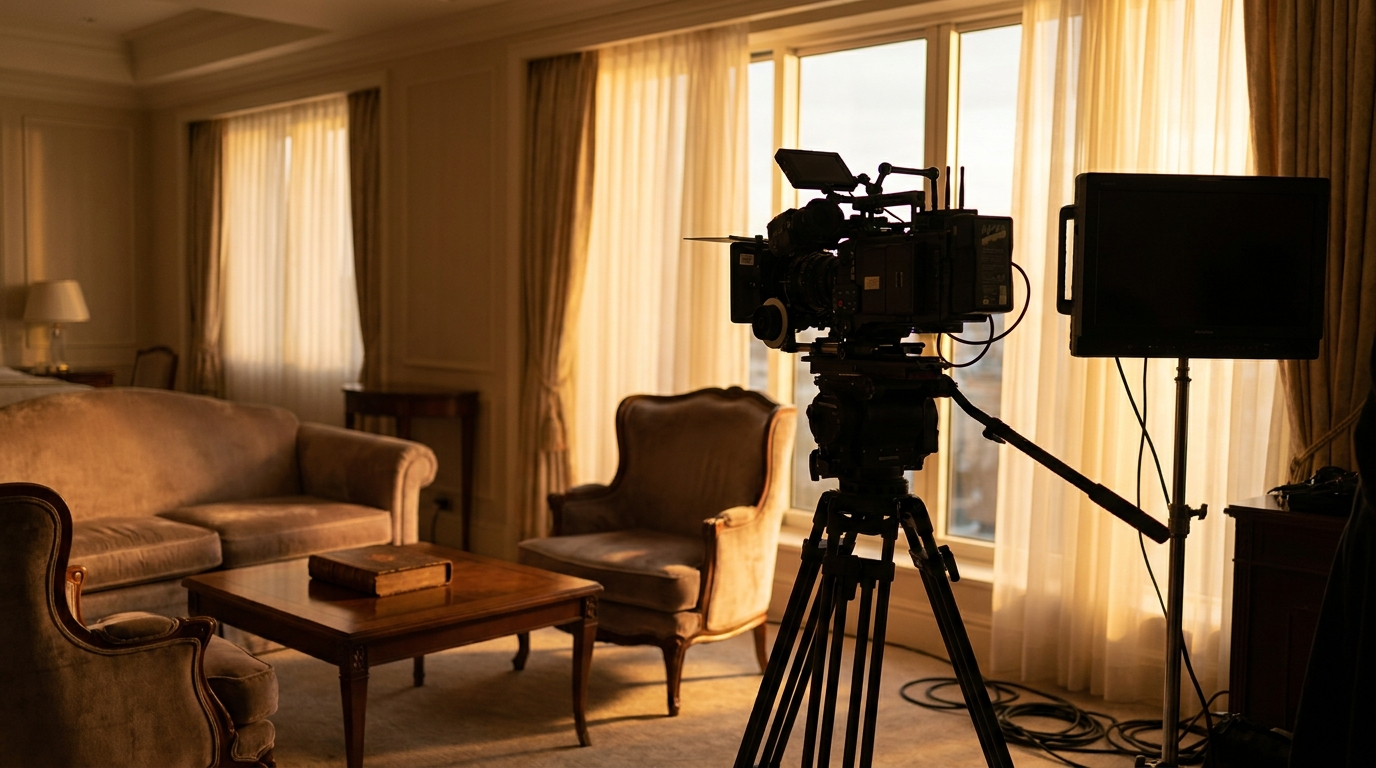
DaVinci Resolve Color Grading: Why It Matters for Hotel Video
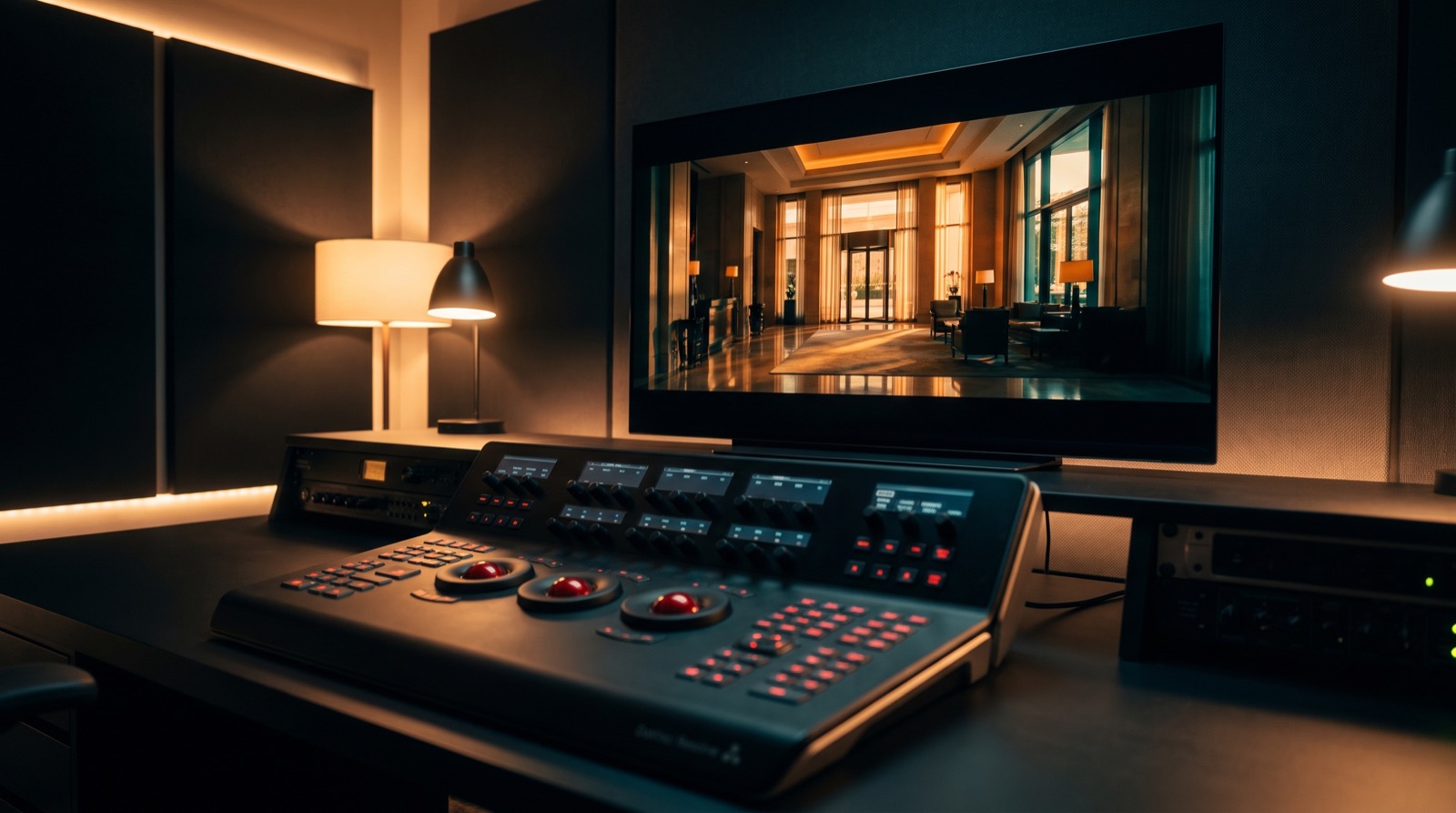
Color grading is the step that makes your hotel look on screen the way it feels in person. It is also the step most hotels never think to ask about. If you want color grading for hotel video done right, the answer is simple: every shot gets matched, balanced, and shaped so the property looks like your brand, not like whatever the light did that afternoon. Skip it, and even a great shoot looks flat and uneven.
Here is what grading actually is, why hotels are harder to grade than most places, and what to ask before you hire anyone.
Grading Is Not a Filter
People hear "color grading" and think Instagram filter. It is not. A filter slaps one look on everything. A grade works shot by shot.
There are two jobs. First, correction. Fix the exposure, fix the white balance, make skin look like skin and white sheets look white. Second, the grade itself. That is the look: warm and golden for a beachfront resort, cool and crisp for a downtown design hotel, deep and rich for a historic property with dark wood everywhere.
Correction makes footage correct. The grade makes it feel like something.
Why Hotels Are Harder to Grade Than Most Places
Hotels are a color nightmare, and I say that with love. Take one lobby shot. Daylight pouring in from the windows. Warm tungsten from the table lamps. Cool LEDs in the ceiling. Brass, marble, walnut, and a wall of plants, all sitting under three different color temperatures at once.
Then the pool. Water is one of the hardest things to get right on camera. Too blue and it looks fake. Too green and it looks dirty. Guests will feel it, even if they can't say why.
Then the details people care about most: white linens that need to stay white, food that needs to look edible, and skin tones on your staff and guests. Get any one of those wrong and the whole piece feels off.
Why I Grade in DaVinci Resolve
I grade in DaVinci Resolve Studio. In my experience it is the strongest color tool there is, and it is the one the film and TV world uses. For a hotel, that matters for practical reasons:
- Node-based grading. Every fix sits on its own layer, so I can isolate the pool, the sky, or a face without wrecking the rest of the frame.
- Shot matching. I can build a look on one shot, copy it across fifty others, then tweak each one.
- Power windows and qualifiers. Tame one hot window, brighten one dark wall, fix one ugly lamp. Nothing else in the frame moves.
- One project, all deliverables. Editing, color, and export live in the same place, so the web film, the paid social cutdowns, and the vertical reels all come from the same graded master.
Now the honest part. The software does not make the grade. Your eyes do. I have seen bad grades made in the best tools. Resolve just gives a colorist the control to do the job properly.
What a Good Grade Actually Fixes
1. Mixed lighting. Warm lamps next to cool daylight is the default in hotels. A grade balances them so the room looks natural instead of orange on one side and blue on the other.
2. Consistency. A hotel shoot runs for a full day or more. Clouds roll in. The sun moves. Without a grade, shot 12 looks like it came from a different property than shot 3.
3. Brand. Your grade should match who you are. A cold, clinical look on a warm boutique inn is wrong, no matter how sharp the footage is. This is a big part of what separates cinematic hotel video from cheap videography. The cheap version skips this step entirely.
4. Everything you deliver. One shoot becomes a hero film, a 30 second ad, 15 second cutdowns, and vertical reels. Grade it once, carry it through, and they all look like they belong together. That is the whole idea behind multi-purpose video production.
Here is a piece we produced for Sofitel Beverly Hills. Watch how the color holds together from one space to the next.
Questions to Ask Before You Hire
Most production companies will say they do color. Few will tell you how. Ask these:
- Do you grade in-house, or send it out? Either can work. You just want to know who is making the calls.
- What do you grade on? A grade done on a laptop screen is a guess. You want a calibrated monitor.
- Is grading a line in the quote? If it is buried in "post," ask what it includes.
- Will every cutdown carry the same grade? The answer should be yes.
Grading happens in post, and it is one piece of a bigger timeline. I break down the full picture in what to expect from start to finish.
The Bottom Line
Guests decide fast whether a property looks like their kind of place. Color is a big part of that decision, and most viewers never notice it working. They just feel that something looks expensive, or that something looks off. If you want more on why video quality shapes trust, Wistia's learning library is a good place to start.
Do not skip the grade. It is the cheapest way to make good footage look like a real film.
Want a hotel film that looks the way your property feels? Talk to us at visioneers.studio/contact or email hello@visioneers.studio.
MORE ARTICLES
Find a selection of Articles you may be interested in based on the this one
How Long Should a Hotel Brand Film Be?
Cinematic Hotel Video vs. Cheap Videography: What Actually Separates Them