Behind the Scenes: Shooting a Luxury Hotel Video in Los Angeles
People picture a hotel video shoot as a small crew wandering the lobby with a nice camera, grabbing a few pretty shots before lunch. That is not what happens. A real hotel video shoot behind the scenes looks more like a small military operation: call sheets, lighting gear staged before sunrise, a shot list with forty entries, and a property still trying to run a business while we're in it.
I've shot at the Sofitel Beverly Hills for four years now. Here's what actually happens on a luxury hotel shoot day in Los Angeles, and why most of it never makes it into the final cut.
The Call Time Nobody Wants (6am, Sometimes Earlier)
Good light is the whole game. The lobby that looks flat and beige at noon looks completely different at 6:30am when the sun's coming in low through the windows. So we show up before the hotel is even fully awake. Front desk staff are doing their handoff, housekeeping carts are lined up in the hallway, and we're setting C-stands in a space that needs to look untouched by 9am when the first guests come down for breakfast.
This is the part clients rarely think about when they ask "how long does a shoot take." The answer is: longer than you'd guess, because half the day is spent working around a property that never actually closes for us.
The Shot List Is the Real Script
Before we ever touch a camera, we build a shot list broken down room by room, moment by moment: the lobby entrance, the pool at golden hour, a detail shot of the turndown service, the restaurant plating a dish, a couple walking the hallway toward their suite. Thirty to fifty shots isn't unusual for a single brand film.
Most of those shots never make the final edit. That's on purpose. We shoot in volume because we're not making one video, we're building a library. I've written before about how one shoot turns into thirty content pieces, and this is where that starts: on set, overshooting deliberately so the editors have real options later instead of stretching three good clips across ten deliverables.
Managing a Live, Operating Hotel
This is the part that separates hospitality video from almost every other kind of shoot. A commercial set is built for the camera. A hotel is not. Guests are checking in. A wedding is being set up in the ballroom next door. Housekeeping needs into the room we're shooting in exactly forty minutes. We work in short windows and reset fast. If a guest walks into frame, we don't yell cut and start over, we just wait, breathe, and pick the take back up. Nobody wants a shoot that makes a five-star property feel like a disruption to its own guests. That coordination, more than any camera or lens, is what makes hospitality video its own skill.
The Crew Is Smaller Than People Expect
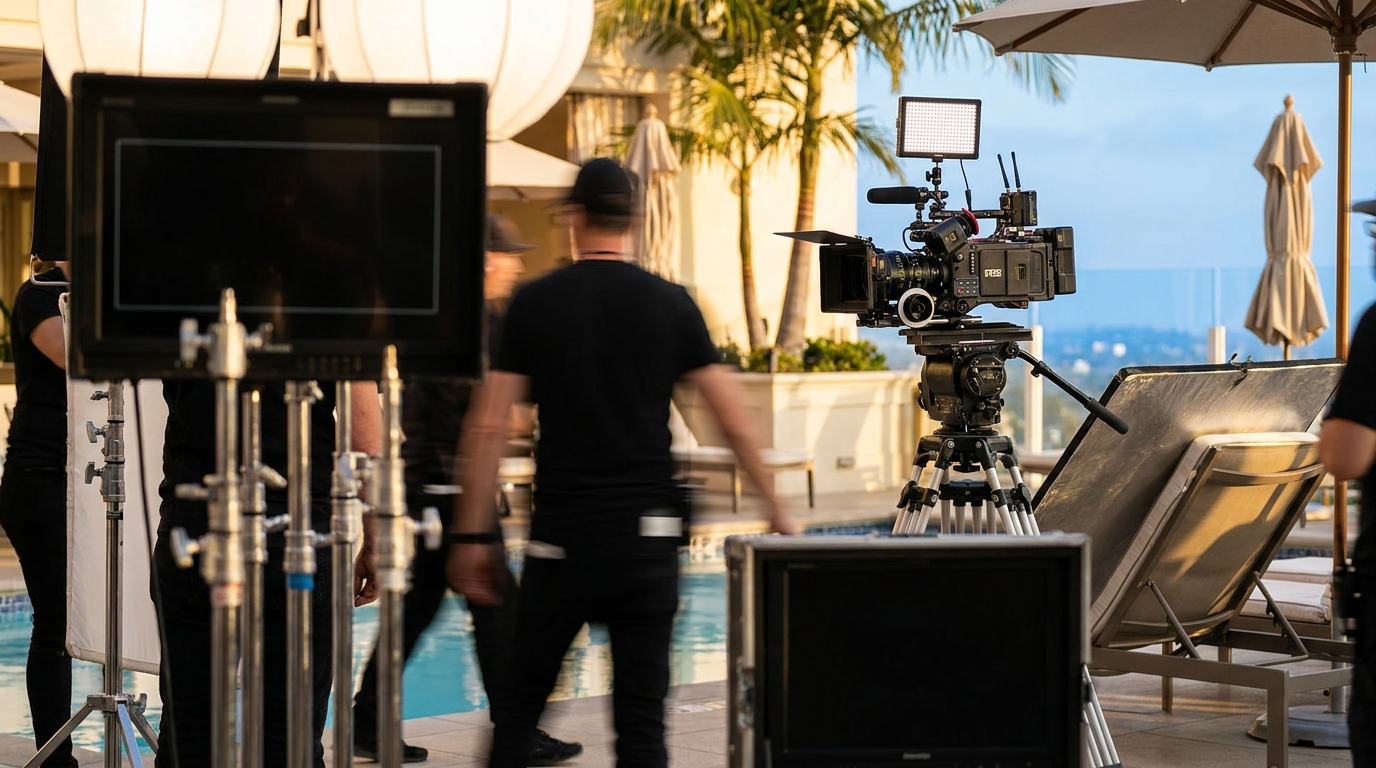
For most hotel shoots we run lean: a director, a cinematographer, one or two additional shooters, and someone managing sound and gear. Not because we're cutting corners, because a bloated crew is disruptive on a property that's trying to operate normally. Blackmagic 6K bodies, a small lighting kit, a gimbal, and people who know exactly what they're there to get. In, out, no wasted setups. Clients sometimes expect a huge production with trucks and a tent. What actually delivers a cinematic result is a tight crew that knows the shot list cold and moves fast between setups.
Golden Hour Is Non-Negotiable
Every hotel shoot I run is built around two windows: early morning and the hour before sunset. Pool shots, exterior architecture, rooftop bars, anything outdoors gets scheduled for golden hour, full stop. It's the difference between a video that looks like a real estate listing and one that looks like something you'd see in a Sofitel or Four Seasons campaign. If a client wants a specific exterior shot and the weather doesn't cooperate that day, we reschedule that shot rather than force it in flat afternoon light. It costs more coordination. It's worth it every time.
Here's a piece we produced for the Sofitel Beverly Hills that shows what a properly lit, well-paced hotel video actually looks like on screen.
What We're Actually Watching For On Set
Beyond the shot list, there's a mental checklist running the whole day: is the branding visible without looking like a billboard, does the staff in frame look natural instead of posed, is there a human moment happening (a real laugh, a real interaction) instead of everyone stiffly performing for the camera. In my experience, the shots that end up carrying the final film are almost never the ones we planned hardest for. They're the accidents: a bartender genuinely laughing at something a guest said, light hitting a curtain a certain way nobody staged. That's exactly the kind of detail I get into in what actually separates a good hotel brand film from a great one, if you want the deeper breakdown of what makes footage work once it's out of the shoot and into the edit.
Then the Real Work Starts
The shoot is maybe a third of the project. What comes out of a full day at a property like the Sofitel is often 500GB or more of raw footage, and that's where post-production takes over: color grading to match the property's actual brand palette, sound design, pacing the edit so it doesn't feel like a slideshow with music under it. According to Hospitality Net, video consistently outperforms static photography for hotel engagement across every major platform, which is exactly why the shoot day matters so much. Bad footage can't be fixed in the edit. Good footage gives editors room to build something that actually holds attention.
The Honest Answer
If you're a hotel or hospitality brand wondering what a shoot day with us actually looks like: it's early mornings, a tight crew, a long shot list we won't use all of, constant coordination with your staff, and a lot of waiting for the right light. It's not glamorous. It's disciplined. That discipline is what shows up on screen later. Thinking about a shoot for your property? Reach out at visioneers.studio/contact or email hello@visioneers.studio and let's talk about what a day on set with us would actually look like for your hotel.
MORE ARTICLES
Find a selection of Articles you may be interested in based on the this one